
QILIPSU IP67 Waterproof Junction Box Review: 11.2" Outdoor Enclosure Tested
I needed a weatherproof enclosure to move my sprinkler controller out of the garage and onto the side of the house. The existing setup worked, but dragging an indoor-rated controller through a half-open garage door every time I adjusted the schedule was getting old. After digging through options, I landed on the QILIPSU IP67 junction box — 2200-plus verified buyers can't all be wrong, and at $22.99, it undercuts most NEMA-rated metal boxes by half.
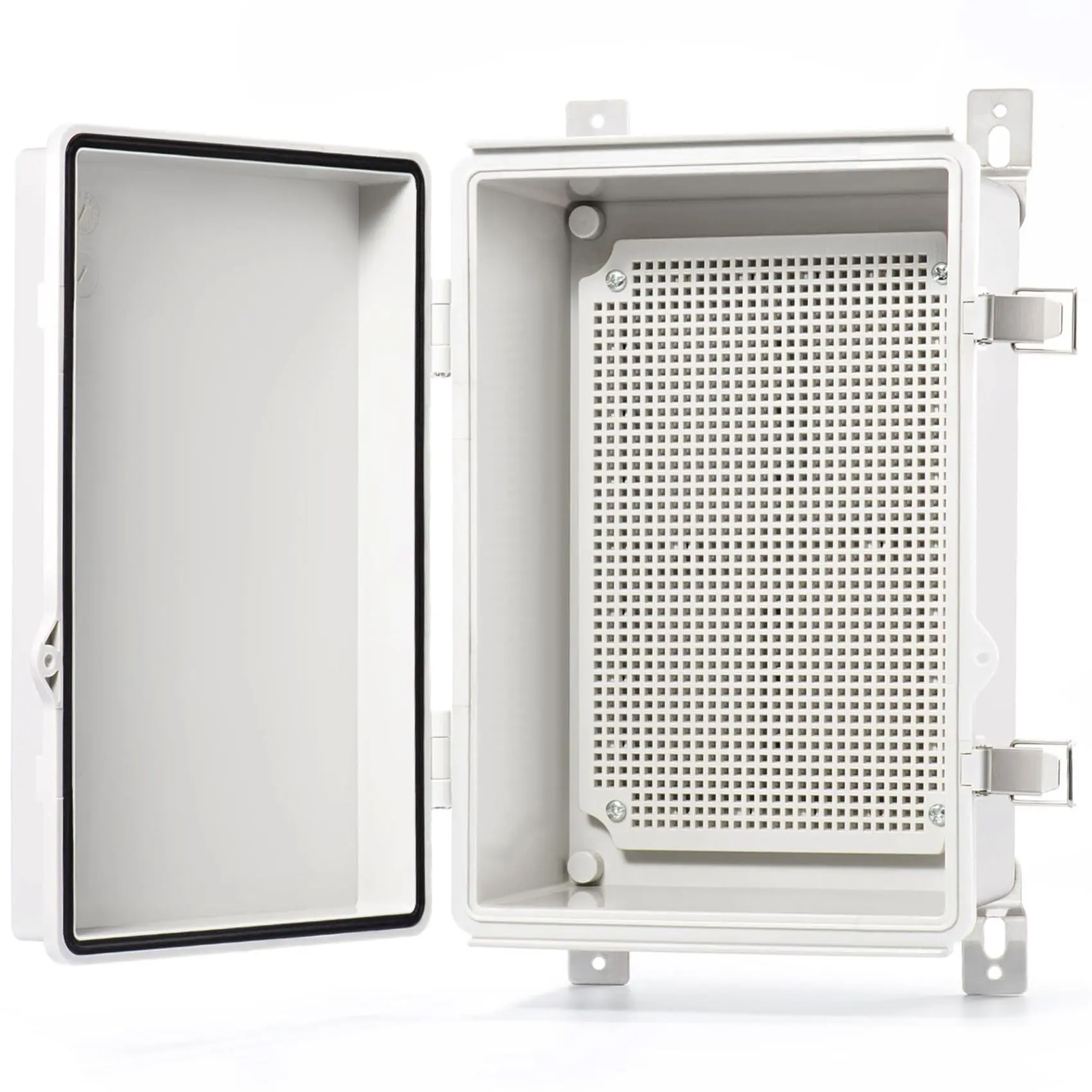
The box arrived in a simple cardboard sleeve, no frills. First impression: the ABS plastic feels thicker than I expected. Not PVC-thick, but substantial enough that it doesn't flex when you squeeze the sides. The grey hinged cover seats against a full-perimeter rubber O-ring gasket — this is the detail that separates actual waterproofing from "water resistant" marketing claims. Stainless steel latches snap shut with a satisfying click. No rust-prone hardware here.
Will My Electronics Overheat Inside a Sealed Enclosure?
This was my biggest worry before buying. I had read plenty of cautionary tales about routers and power supplies cooking themselves inside sealed boxes, and I wasn't about to fry a controller over a $22.99 enclosure. The short answer: it depends on what you put inside, but for passive connections and low-power devices, heat is a non-issue.
The QILIPSU isn't ventilated out of the box — the IP67 rating means it's sealed tight. For my sprinkler controller, which draws negligible power and only activates solenoids for a few minutes a day, there is zero heat buildup. If you are enclosing a PoE switch or a Starlink router that runs warm 24/7, I would drill a couple of small vent holes near the top edge and cover them with a rain hood. Several owners in hotter climates have done exactly that with good results. The ABS drills cleanly without cracking if you clamp a piece of scrap wood on both sides of the hole — I used this trick when cutting a 3/4-inch port in the back and the result was spotless.
One thing to keep in mind: this is a plastic box, and that is actually a good thing if you are housing anything with an antenna. Metal enclosures kill WiFi and cellular signals dead. A plastic junction box like this one lets your wireless gear breathe, radio-wise, while keeping the rain out.
Is an ABS Plastic Junction Box Safe for Outdoor Electrical?
I asked myself the same question. The electrical-safety conversations out there can be intense, and for good reason — nobody wants to be the person whose DIY enclosure made it into the insurance adjuster's report. Here is where the QILIPSU's material choice matters: ABS is the same thermoplastic used in most indoor electrical boxes and outlet housings. It has a high ignition temperature and self-extinguishing properties that cheaper plastics like PLA lack. The box isn't going to fuel a fire.
The real safety question comes down to what is inside the box and how well you terminate your connections. The enclosure itself is mechanical protection — the connections you put inside it are what carry the load. Use quality lever-lock connectors, keep your terminations clean, and size your wiring correctly for the current. The QILIPSU's internal mounting plate gives you a flat, pre-drilled surface to anchor everything down so nothing rattles loose over time. I mounted my controller, a small terminal block, and a DC power supply to the backplane in about 15 minutes. Everything stays put.
For low-voltage applications — landscape lighting transformers, irrigation controllers, ham radio gear, LED drivers, PoE injectors — this enclosure is perfectly within its element. For 120V or 240V mains connections, I would still use it, but I would also pot the connections in dielectric silicone and add strain relief on every cable entry. The enclosure handles the environmental protection; the terminations handle the electrical safety.
What sold me on using a waterproof enclosure for outdoor power was seeing what happens to unprotected connections after a single rainy season. Corrosion creeps into every terminal, moisture wicks up stranded wire, and within a year you are chasing intermittent faults that make no sense. With the gasket sealed and the cables entering from the bottom through glands, I plug in my seasonal lights and walk away — no bags, no buckets, no crossed fingers when the forecast calls for rain.
How Do You Run Cables In Without Losing the Waterproof Seal?
This is where the QILIPSU's design philosophy shines. The box has no pre-cut knockouts, and that is a feature, not an oversight. Every hole you drill is exactly the size you need and exactly where you want it. The downside is you need a drill and the right bits. The upside is you are not stuck with a 1/2-inch knockout in the wrong spot or a pre-punched hole you do not need.
I ran three cables into mine: the power cord from the garage, the zone valve wires heading out to the manifold, and a rain sensor cable. All three enter through the bottom face of the box — never the sides or top — because gravity is your best friend in waterproofing. For each cable, I drilled a hole slightly larger than the cable diameter, then sealed it with a cable gland. The wall thickness held the gland threads securely once tightened. Four months in through spring storms, and the inside of the box is bone dry.
The enclosure has five cable entry points molded into the design, and the included wall brackets give you flexibility. I tested both mounting options: using the external tabs works fine on flat siding, but for a stone or brick wall, I found it cleaner to skip the brackets entirely and screw directly through the back of the box. The corner holes in the mounting plate work as perfect drill guides for this. The box sits flush against the wall with zero gap for water to sneak behind.

The trick I picked up from installing a few of these across different brands is that cable placement order matters more than the box itself. Run your thickest cable through first and position it nearest the hinge side — that way the thinner sensor and data cables can flex around it when the lid closes. If you jam everything through the center slots and the door has to fight the bundle, the gasket will not seat evenly and you lose the seal.
Pros, Cons, and Verdict
What I like: The O-ring gasket is the star of the show — thick, evenly seated, and it compresses firmly when the latches close. The stainless hardware throughout means no rust streaks after a season outdoors. The pegboard-style mounting plate inside is genuinely useful; I did not have to fabricate a custom bracket to mount my controller. The ABS drills and cuts cleanly with basic tools. And at 11.2 by 7.7 by 5.1 inches, there is enough depth to run coax or LMR-400 cable without sharp bends, which matters for radio applications.
What could be better: The box does not come with cable glands, which feels like a miss at this price point. You will need to buy a pack separately, and without them, your drilled holes are just holes — not waterproof. Also, while the ABS is solid, it is on the lighter side compared to a cast-metal NEMA box. If you are mounting somewhere that takes physical abuse — think forklift-adjacent in a warehouse — this is not the right enclosure. The child-resistant latch is a clever safety feature, but in practice it means you need two hands to open the lid, which is mildly annoying when you are troubleshooting in the rain.
QILIPSU IP67 Waterproof Junction Box
A rugged ABS outdoor enclosure with full-perimeter gasket seal and stainless hardware — keeps connections dry season after season.
View Product — $22.99The enclosure market splits into two tiers: budget boxes with flimsy latches and questionable gaskets, and industrial NEMA-rated metal boxes that cost three figures. The QILIPSU lands in a sweet spot where it does not exist. You get the gasket quality and stainless hardware of a premium enclosure with the weight and drillability of ABS. It is not UL-listed, and if you are an electrician pulling a permit, you already know that matters. For everyone else protecting outdoor electronics on a residential or light-commercial scale, this box does exactly what it promises.
| Product Specs | |
|---|---|
| Brand | QILIPSU |
| Material | ABS Plastic |
| Waterproof Rating | IP67 |
| External Dimensions | 11.2" x 7.7" x 5.1" (285 x 195 x 130mm) |
| Cover Type | Hinged Grey Cover with Stainless Steel Latches |
| Included | Mounting Plate, Wall Brackets |
| Gasket | Full-Perimeter Rubber O-Ring |
| Price | 22.99 USD |
I bought two more after the first install went well — one for the pool pump timer enclosure and one for a ham radio antenna switch mounted out by the shed. If you are planning a larger structured cabling setup across multiple buildings, these boxes make clean outdoor termination points for every home run. They also work well as inline enclosures for a PoE lighting installation where injectors or splitters need weather protection mid-span. And if you are hardening an outdoor WiFi access point against the elements, a plastic enclosure beats metal for signal transparency every time. At this price, it is cheaper than calling an electrician to bend conduit for a metal box, and the result looks cleaner than a Tupperware container zip-tied to a downspout. If you need outdoor protection for electronics that do not generate serious heat, this is the box to beat.