
iMBAPrice RJ45 Network Cable Tester Review: LED Continuity Tester for CAT5/CAT6/CAT7
I learned the hard way that eyeballing an RJ45 termination isn't a testing strategy. After running 16 Cat6 drops through my basement and attic last month, I plugged in my switch and got... three dead links. No link lights, no negotiation, just silence. I re-terminated every jack twice before accepting that I needed an actual way to see what was wrong. That's when I picked up the iMBAPrice RJ45 Network Cable Tester from this site — ten bucks, no battery included, and the most useful diagnostic tool I now own.
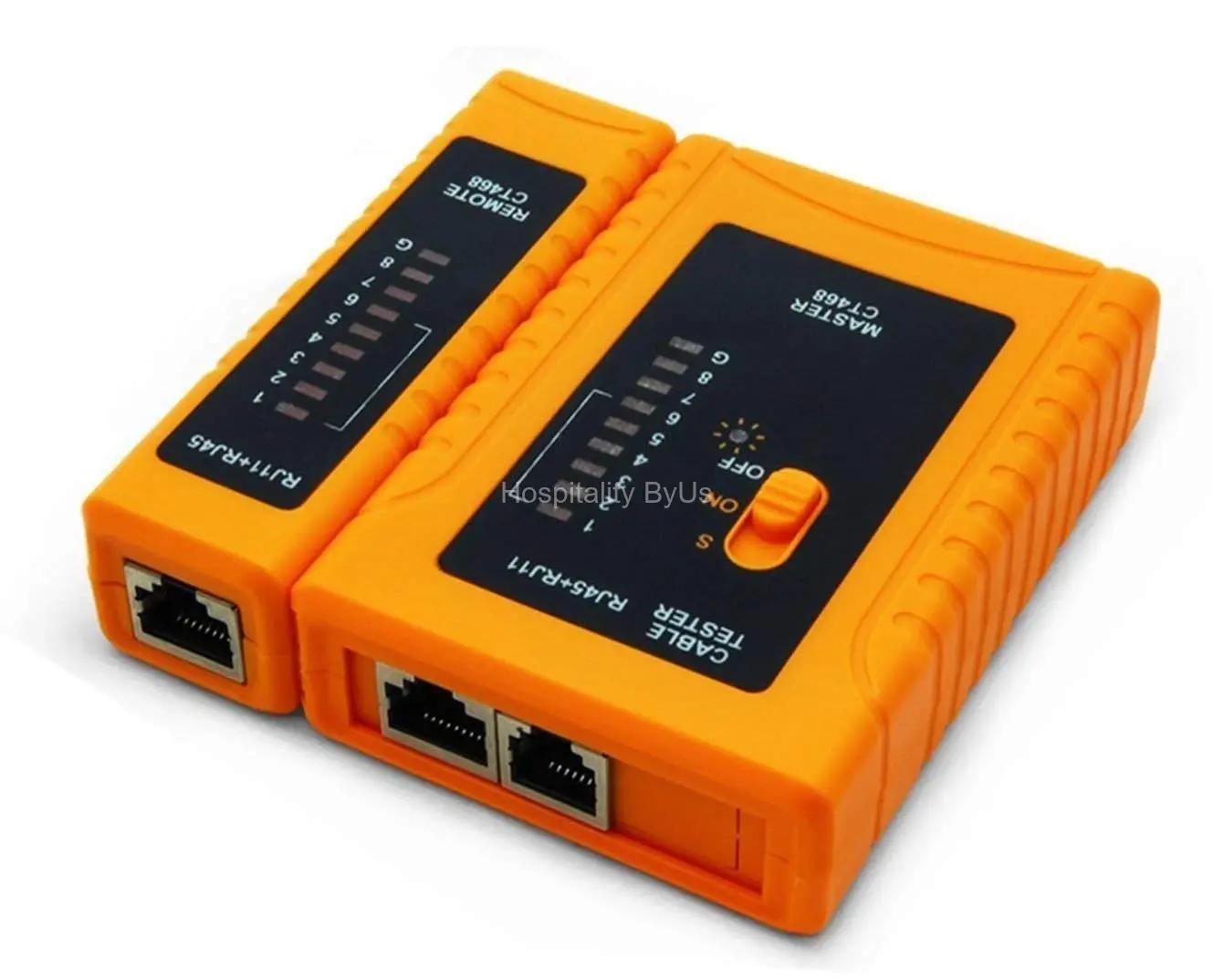
For the price of a decent lunch, this little tester tells you in seconds whether your cable has continuity, an open, a short, or crossed pairs. It comes as two pieces — the main unit and a removable remote — so you can test cables that are already run through walls without running back and forth between ends. No screen, no menus, no manual to read. Just plug in both ends and watch the LEDs.
Is a Cheap Cable Tester Actually Worth Buying?
This is the question I saw asked constantly before I bought one, and the answer depends on how many cables you're planning to terminate. If you're doing more than two cables, yes — absolutely buy one. Testing by plugging into a switch and hoping for a link light doesn't tell you which pair is miswired or where the break is. You get a binary pass/fail with zero diagnostic information.
The iMBAPrice tester checks all eight conductors in sequence, lighting up LEDs 1 through 8 on both the main unit and the remote simultaneously. If LED 3 stays dark on the remote, you know pin 3 is open somewhere. If LEDs 3 and 6 light up out of order, you've got a crossed pair — the most common mistake when you flip the T568B order. It also handles RJ11 phone cables, which is a nice bonus if you're in an older house with phone jacks you might repurpose for Ethernet. Pair this with a decent ratchet crimping tool and you've got a complete termination kit for under fifty bucks.
Is it a Fluke or a Klein Scout Pro? No — those run hundreds of dollars and measure crosstalk, impedance, and cable length. Those are for professional installers who certify cable runs. This is a continuity tester, which is effectively a specialized multimeter for twisted-pair cable. For a homeowner or small office doing their own runs, a simple LED-based tester catches 95% of real-world termination errors for about five percent of the price of a pro unit. If you're planning a larger deployment, the structured cabling best practices guide is worth reading before you pull the first cable.
What Can This Tester Actually Diagnose?
The big three problems it catches: opens, shorts, and crossed pairs. An open means a wire isn't making contact — usually a punch-down that didn't seat fully or a crimp that missed the conductor. A short means two conductors are touching, which can happen inside a poorly crimped RJ45 plug or at a punch-down block where insulation got nicked during stripping. Crossed pairs are when the wire order is wrong at one end — the classic "I swore I followed 568B" moment.
The LED sequence is straightforward once you see it work once. Each numbered LED corresponds to a pin in the RJ45 connector. Both units cycle through 1-8 in order. If the remote's LEDs match the main unit, the cable is wired correctly end-to-end. If a remote LED doesn't light, that conductor is open. If the wrong LED lights, you've got a miswire. There's no ground test, no shield test, and no length measurement — but at this price point, you're not expecting those features.
One limitation worth noting: this tester can't tell the difference between a wire that's fully broken and one that's barely making contact. A conductor that's hanging on by a single strand of copper will pass the LED test but fail under actual network load. That's not a flaw — it's the nature of continuity testing — but it means a passing test doesn't guarantee a gigabit-capable link. For that, you still want to verify with an actual device on each end.
Something I picked up after running cables through an office space: having a tester that works across a finished run — with one unit at the patch panel and the remote at the wall jack — saves you from the walk of shame back and forth when you miscount which port you're testing. The remote unit is small enough to clip onto a keystone jack without pulling it out of the wall plate, which matters more than you'd think when you're testing a dozen drops in sequence.
What separates a basic continuity tester from the next tier up is the ability to do more than just confirm wire order — the better units add length measurement, port flashing for tracing, and sometimes PoE detection. But for most home and small office installs, you don't need those features on every job. The continuity test tells you whether your termination is correct right now, before you button up the wall plate and walk away.
Pros, Cons, and Verdict
What I like about this tester:
- Dead simple to use — plug in, flip the switch, read the LEDs — no setup, no calibration, no instructions needed after the first use
- The removable remote unit means you can test installed runs without a second person or running back and forth
- Handles RJ45 (Ethernet) and RJ11 (phone) connectors, which covers the two cable types most homes and small offices actually use
- Catches opens, shorts, and crossed pairs in under two seconds per cable
- At this price, it pays for itself the first time it prevents you from re-terminating a cable that was fine all along
- Compact enough to live in a tool bag without taking up meaningful space
What to keep in mind:
- Battery not included — you need a 9V battery, which isn't something everyone keeps in a drawer anymore
- No shield/ground continuity test — if you're working with shielded Cat6a or Cat7, this won't verify the drain wire
- The LED sequence requires your full attention — there's no "all good" summary light, so you have to watch all 8 LEDs cycle on both units
- It's a continuity tester, not a qualifier — a passing test means the wires are connected in the right order, not that the cable will carry gigabit speeds without errors
- The build is lightweight plastic — it'll survive a tool bag, but it won't survive being stepped on
The bottom line: For anyone running their own Ethernet — whether it's two drops in a home office or twenty in a small business — a basic continuity tester is not optional equipment, and this iMBAPrice unit does the job without costing more than the cable you're testing. It doesn't replace a professional certifier, and it won't measure crosstalk or cable length, but it catches every common termination mistake that leaves you staring at a dead link light wondering where you went wrong. I've used it on over two dozen cables since buying it, and it's already saved me from re-terminating three jacks that were actually fine — the problem was at the patch panel. That alone was worth the ten bucks.
iMBAPrice RJ45 Network Cable Tester
LED continuity tester for RJ45/RJ11 — catches opens, shorts, and crossed pairs on CAT5 through CAT7 cable runs.
View Product — $9.99The key specs at a glance:
| Product Specs | |
|---|---|
| Brand | iMBAPrice |
| Product Type | RJ45/RJ11 Network Cable Tester |
| Connector Types | RJ45 (8P8C), RJ11 (6P) |
| Cable Compatibility | CAT5, CAT5e, CAT6, CAT7, UTP |
| Tests Performed | Continuity, open, short, crossed pairs |
| Display | 8-LED sequence (main + remote unit) |
| Remote Unit | Detachable for testing installed cable runs |
| Power | DC 9V battery (not included) |
| Phone Line Testing | DC line detection, ring signal detection |
It's not glamorous, and it won't impress anyone who works in a data center, but for the rest of us pulling cable on evenings and weekends, it's exactly the right tool at exactly the right price.